
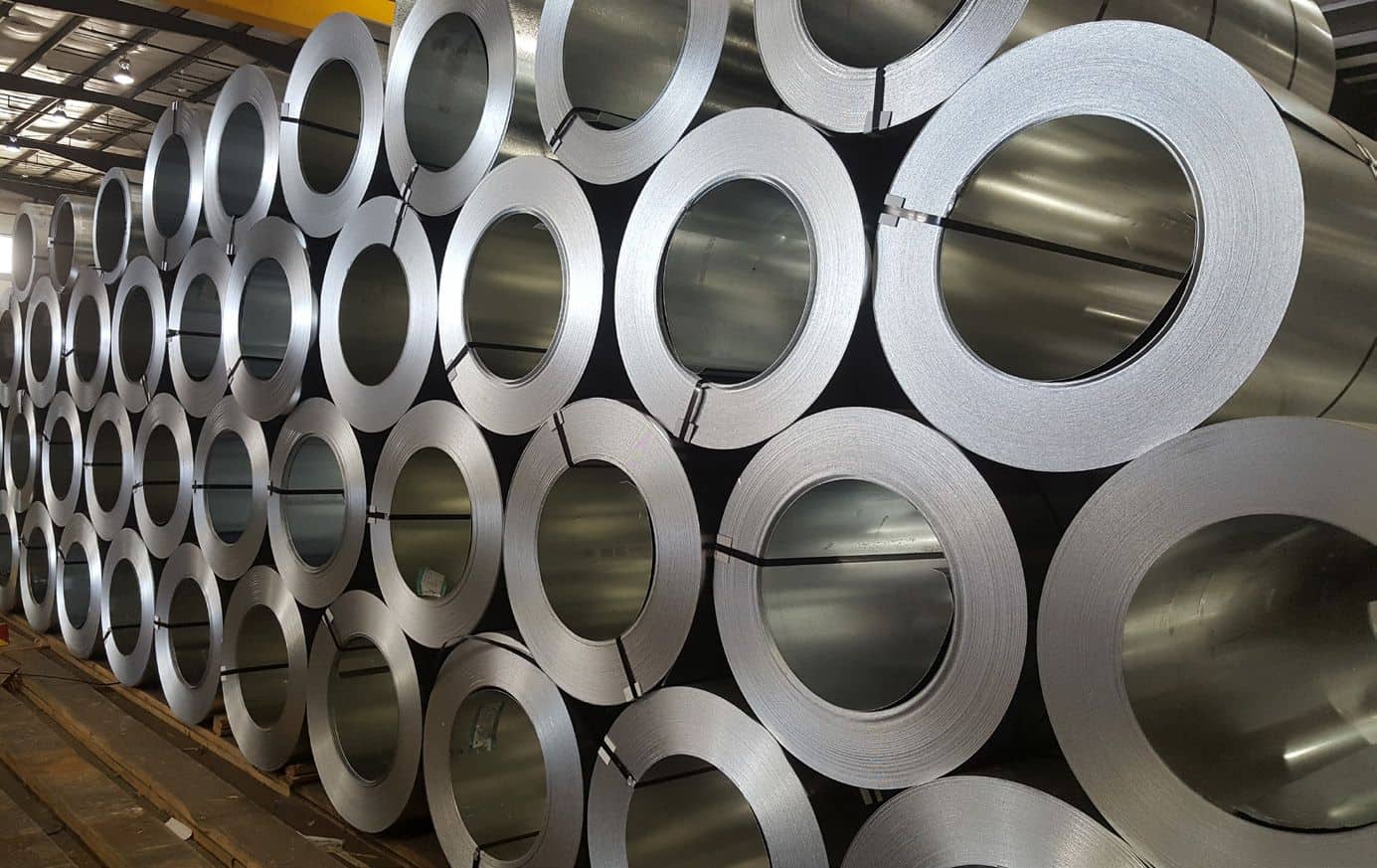
Galvanized vs. Galvalume Steel: What’s the Difference?
What Is Galvanized Steel?
Galvanized steel is carbon steel coated with a protective layer of zinc, typically applied through a hot-dip process. The zinc coating provides sacrificial corrosion protection, meaning the zinc preferentially corrodes to help protect the underlying steel. It also provides barrier protection by separating the steel from its surrounding environment.
This sacrificial protection is particularly beneficial around scratches, cut edges and other areas where the steel may become exposed.
Galvanized steel is widely used in construction, structural components, framing, decking and general fabrication. It is especially useful in applications where forming requirements and zinc-based sacrificial protection are important considerations.
What Is Galvalume Steel?
Galvalume steel is carbon steel coated with an aluminum-zinc alloy consisting of approximately 55% aluminum, 43.4% zinc and 1.6% silicon.
This coating combines the barrier protection of aluminum with the sacrificial protection of zinc, providing excellent long-term atmospheric corrosion resistance in many exposed applications.
The aluminum-rich coating helps protect the steel surface from environmental exposure, while the zinc component provides sacrificial protection in areas where the coating is damaged or the steel is exposed. However, Galvalume generally provides less sacrificial protection at cut edges than galvanized steel.
Galvalume is commonly used for roofing, siding, architectural panels and other building products where long-term atmospheric corrosion resistance is a key consideration.
Which Should You Choose?
Neither coating is universally better. The appropriate choice depends on the application, service environment, fabrication requirements and desired service life.
Galvanized steel is widely used for applications involving forming, fabrication and general construction, as well as applications where stronger zinc-based sacrificial protection is particularly beneficial. Its protective characteristics make it a practical choice for framing, decking and a wide range of manufactured steel components.
Galvalume steel is commonly selected for exposed building applications such as roofing, siding and architectural panels. Its aluminum-zinc coating generally provides superior long-term atmospheric corrosion resistance compared with galvanized steel of comparable coating thickness in many environments.
However, environmental conditions should always be considered. Exposure to certain chemicals, persistent moisture, wet concrete or aggressive coastal environments can affect coating performance and suitability.
Both substrates can also be supplied as pre-painted steel, combining the metallic coating with a factory-applied paint system such as PVDF, SMP or Polyester. When specifying pre-painted material, the substrate, metallic coating weight, paint system, service environment and warranty requirements should all be considered together.
In short, galvanized steel provides proven zinc-based sacrificial and barrier protection, while Galvalume combines aluminum and zinc to deliver enhanced corrosion resistance in many exposed applications. The best choice depends on how and where the material will be used.
Galvanized vs. Galvalume: Comparison Table
| Property | Galvanized | Galvalume |
|---|---|---|
| Coating composition | Zinc | Approximately 55% aluminum, 43.4% zinc, 1.6% silicon |
| Common coating designations | G90 / Z275 | AZ50 / AZM150 |
| Corrosion protection | Zinc-based sacrificial and barrier protection | Aluminum-rich barrier and zinc-based sacrificial protection |
| Cut-edge protection | Strong sacrificial protection | Sacrificial protection, generally less than galvanized |
| Atmospheric exposure | Good corrosion resistance | Generally superior corrosion resistance in many environments |
| Forming and fabrication | Well suited for forming and fabrication | Suitable for many forming applications; severe forming may require additional consideration |
| Concrete contact | Suitable for certain applications, subject to specification | Direct contact with wet concrete not recommended |
| Typical applications | Framing, decking, fabrication and general construction | Roofing, siding and architectural panels |
| Pre-painted availability | PVDF, SMP and Polyester | PVDF, SMP and Polyester |
Note: Coating designations shown are common ASTM imperial and metric equivalents. Actual coating requirements, environmental suitability and warranty coverage should be confirmed with the material supplier or manufacturer.