
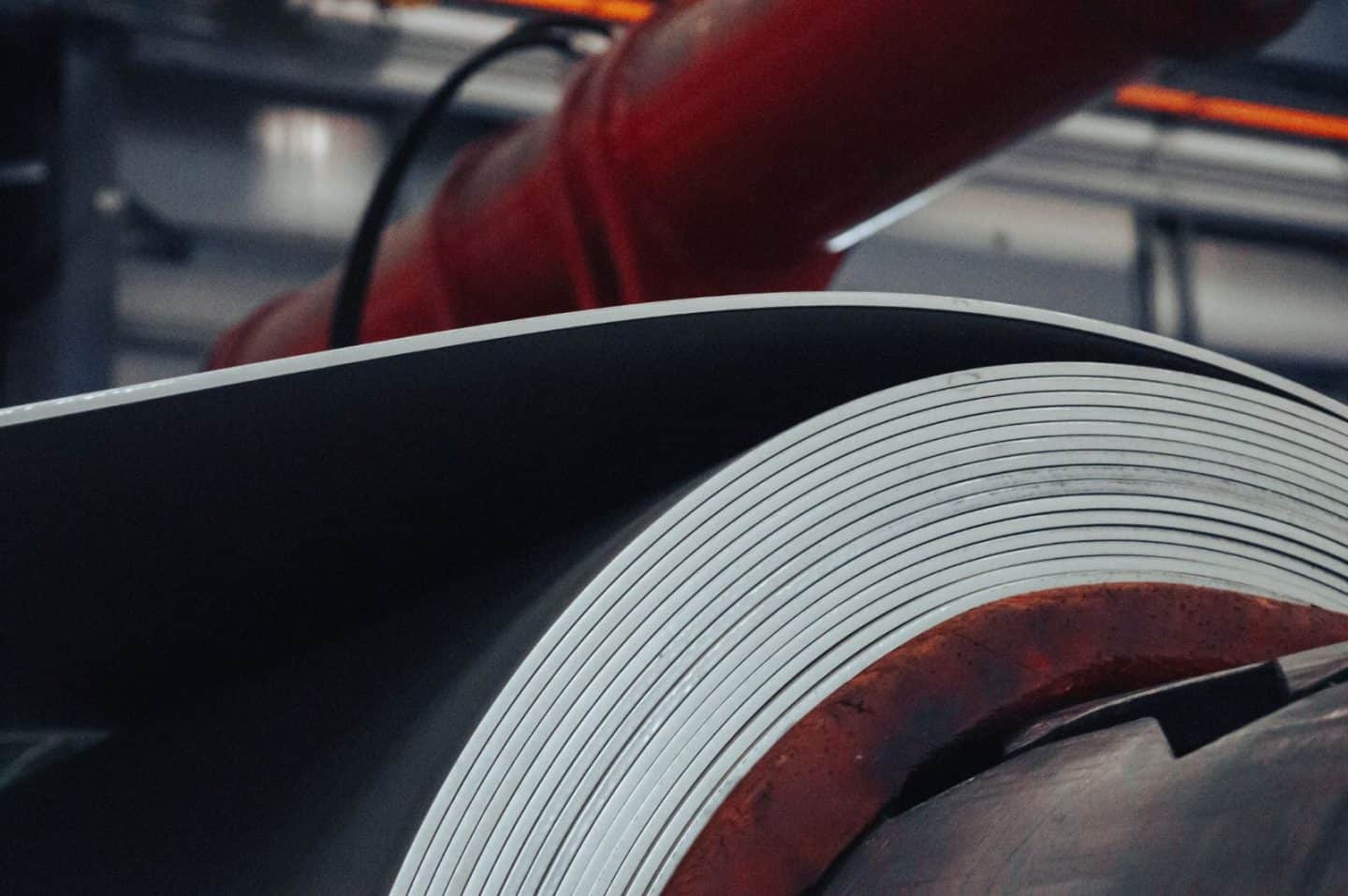
Some of the most common stainless steel finishes include 2B, #4, BA and #8, along with mill finishes such as 2D and HRAP.
Understanding these differences can help determine which finish is best suited for a particular project.
What Is a 2B Stainless Steel Finish?
2B is one of the most common cold-rolled stainless steel finishes. It has a smooth, relatively uniform surface with a moderate level of reflectivity.
The finish is typically produced by cold rolling, annealing and descaling the steel, followed by a final light rolling pass using polished rolls.
This process creates a smooth, non-directional surface that is suitable for a wide range of industrial and manufactured products.
Common applications include:
- Food processing equipment
- Commercial kitchen equipment
- Tanks and enclosures
- General fabrication
- Industrial equipment
- Manufactured components
Because of its versatility, 2B stainless steel is widely used for applications where a clean, consistent surface is required without additional decorative polishing.
It can also serve as the starting surface for further polishing or finishing.
What Is a #4 Stainless Steel Finish?
A #4 stainless steel finish is a general-purpose polished finish with a recognizable directional brushed appearance.
It is typically produced through mechanical polishing or brushing, which creates fine, parallel lines across the surface.
The visible grain gives #4 stainless steel its characteristic brushed appearance, making it a popular choice for applications where appearance and functionality are both important.
Common applications include:
- Commercial kitchens
- Appliances
- Architectural components
- Elevators
- Food processing equipment
- Decorative fabrication
- Wall panels and enclosures
The brushed surface can help make minor handling marks and everyday surface wear less noticeable compared with highly reflective finishes.
However, the exact texture and surface roughness can vary depending on the polishing process and supplier. Applications with specific sanitary or cleanability requirements may require additional surface roughness specifications.
What Is BA — Bright Annealed Stainless Steel?
BA, or Bright Annealed, is a smooth, bright and highly reflective stainless steel finish.
It is typically produced by cold rolling followed by annealing in a controlled protective atmosphere that minimizes oxidation and scaling during the heat treatment process.
This results in a brighter, more reflective surface than standard 2B stainless steel without requiring the same mechanical polishing process used to produce a #8 mirror finish.
Common applications include:
- Decorative components
- Appliances
- Architectural products
- Trim and manufactured components
- Applications requiring a smooth, reflective surface
BA stainless steel provides a clean, bright appearance and can be an effective choice where reflectivity is desired without specifying a fully polished mirror finish.
Although BA can be highly reflective, it should not automatically be considered equivalent to a #8 mirror finish.
What Is a #8 Mirror Finish?
A #8 stainless steel finish is a highly polished, mirror-like surface commonly selected for decorative and architectural applications.
The finish is produced through progressive mechanical polishing using increasingly fine abrasives and finishing compounds to create a highly reflective appearance with polishing lines substantially removed.
Compared with 2B, #4 and BA finishes, #8 provides a more pronounced mirror-like appearance.
Common applications include:
- Architectural features
- Decorative wall panels
- Elevators
- Signage
- Interior design elements
- Highly visible fabricated components
A #8 finish is generally selected when appearance and reflectivity are primary considerations.
Because the polished surface is highly reflective, fingerprints, scratches and surface imperfections may be more noticeable. Appropriate handling, fabrication and maintenance practices are therefore important.
The final appearance can vary depending on material quality, polishing methods and supplier specifications.
What About 2D and HRAP Stainless Steel?
In addition to the more commonly specified 2B, #4, BA and #8 finishes, stainless steel is also available in mill finishes such as 2D and HRAP.
2D Stainless Steel Finish
2D is a cold-rolled stainless steel finish with a smooth, dull and non-reflective surface.
It is typically produced through cold rolling, annealing and pickling or other descaling processes, without the final polished-roll pass commonly associated with a 2B finish.
Its lower reflectivity makes it suitable for applications where appearance is secondary to function.
Common applications include:
- Industrial components
- Formed parts
- General manufacturing
- Applications requiring further processing
HRAP — Hot Rolled, Annealed and Pickled
HRAP stainless steel is produced through hot rolling, followed by annealing and pickling to remove surface scale.
This process typically produces a dull, non-reflective industrial surface commonly associated with a No. 1 stainless steel finish.
HRAP is often supplied in heavier gauges and plate products where structural, fabrication or industrial requirements are more important than a decorative appearance.
Common applications include:
- Industrial equipment
- Tanks and vessels
- Heavy fabrication
- Structural components
- Process equipment
HRAP provides a practical option for applications where the surface appearance of hot-rolled stainless steel is acceptable.
Stainless Steel Finish Comparison
| Property | 2B | #4 | BA | #8 |
|---|---|---|---|---|
| Finish type | Cold-rolled mill finish | Brushed / polished | Bright annealed | Mirror polished |
| Appearance | Smooth, uniform | Directional brushed grain | Bright, smooth | Highly reflective mirror |
| Reflectivity | Moderate | Low to moderate | High | Very high |
| Visible grain | No intentional directional grain | Yes | No intentional directional grain | Polishing lines substantially removed |
| Typical applications | General fabrication, equipment | Kitchens, appliances, architectural panels | Decorative and manufactured products | Architectural and decorative features |
| Additional polishing | Not typically required | Yes | Not typically required | Yes |
Note: Surface appearance, texture and reflectivity can vary depending on the stainless steel grade, manufacturing process and supplier. Finish designations do not necessarily establish a specific surface roughness or sanitary performance requirement.
Which Stainless Steel Finish Should You Choose?
The appropriate stainless steel finish depends on the intended application, appearance requirements, fabrication processes and operating environment.
2B stainless steel is a versatile general-purpose choice for industrial equipment, fabrication and manufactured components where a smooth, consistent surface is required.
#4 stainless steel is commonly preferred for applications where a brushed appearance is desired, including commercial kitchens, appliances, architectural components and decorative fabrication.
BA stainless steel is suitable for applications requiring a bright, reflective surface without the additional mechanical polishing associated with a #8 mirror finish.
#8 stainless steel is generally selected for decorative and architectural applications where a highly reflective, mirror-like appearance is a primary consideration.
2D and HRAP stainless steel provide additional options for industrial and manufacturing applications where decorative surface appearance is less important.
Other factors should also be considered, including stainless steel grade, thickness, surface roughness, cleaning requirements, corrosion exposure, forming requirements and final use.
The finish alone does not determine corrosion resistance. The stainless steel grade, surface condition, environment and fabrication practices all contribute to long-term performance.
In short: 2B provides a versatile, smooth mill finish; #4 offers a directional brushed appearance; BA delivers a bright, reflective surface; and #8 provides a highly polished mirror finish. 2D and HRAP offer practical alternatives for applications where a more industrial surface is appropriate.
Always review the applicable material specifications, finish requirements and project conditions before making a final selection.