
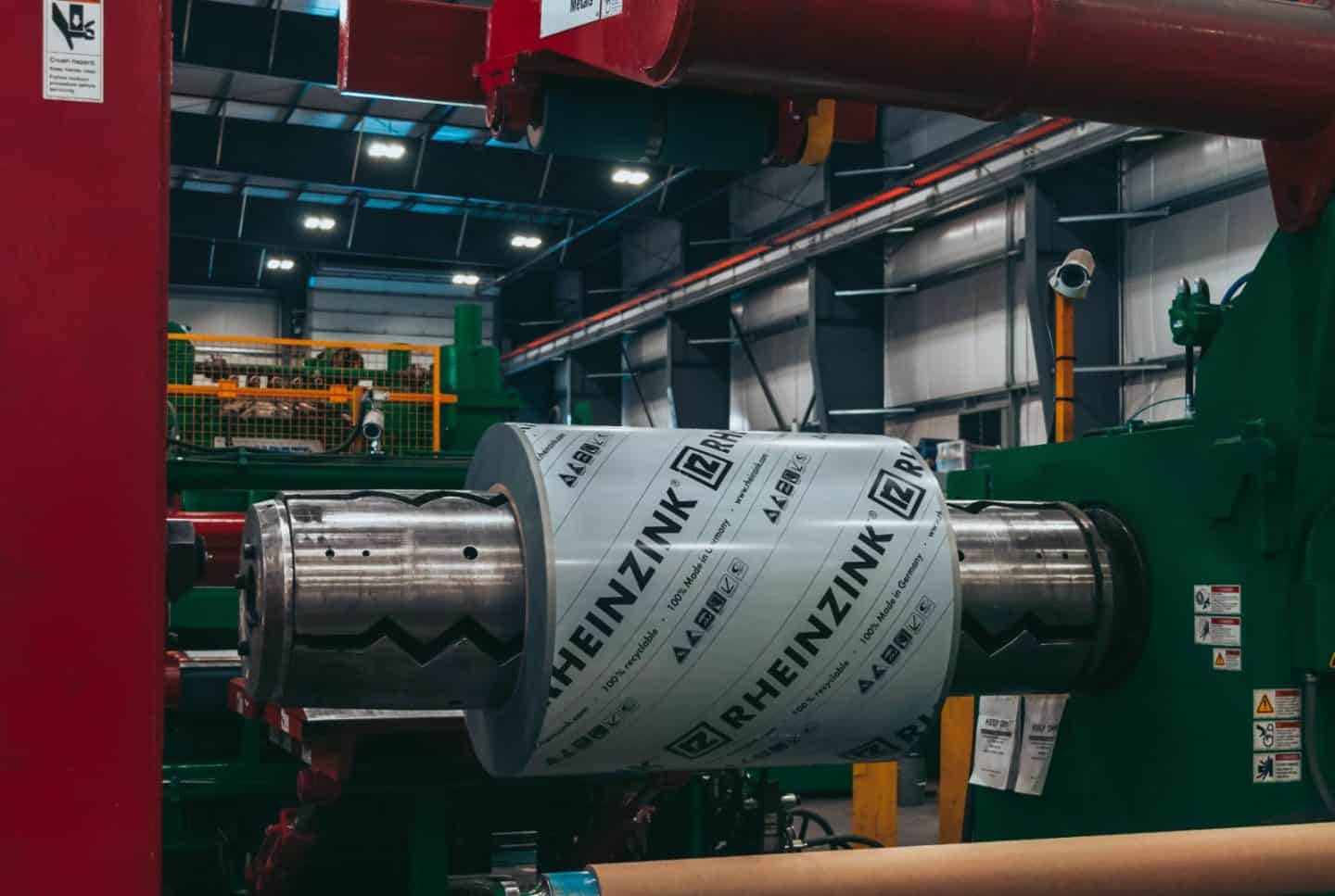
One of the material’s most recognizable characteristics is its ability to develop a natural protective patina over time, giving zinc a distinctive appearance that evolves as it is exposed to the environment.
What Is RHEINZINK Made From?
RHEINZINK is manufactured from high-purity zinc alloyed with small, controlled amounts of copper and titanium.
These alloying elements contribute to the material’s mechanical and processing characteristics while retaining the natural properties associated with architectural zinc.
The Natural Zinc Patina
Unlike a conventional painted metal, zinc develops a naturally occurring surface layer when exposed to the atmosphere.
This patina develops gradually and helps protect the underlying zinc while producing the characteristic appearance associated with architectural zinc.
Because patination is a natural process, the appearance of the material can evolve over time and may vary depending on environmental conditions and exposure.
Where Is RHEINZINK Used?
RHEINZINK is particularly associated with architectural applications, including:
Its combination of formability and distinctive appearance allows it to be incorporated into both traditional and contemporary architecture.
Natural and Pre-Weathered Appearances
Architectural zinc is available in different surface appearances.
Natural mill-finish zinc develops its characteristic patina gradually after installation, while pre-weathered surface options can provide a more developed zinc appearance from the beginning.
The selected surface should be considered alongside the building design, installation method and expected environmental exposure.
Why Do Architects Specify Zinc?
Architectural zinc is often selected because it combines distinctive aesthetics, long service life, formability and low maintenance requirements.
Its ability to naturally change over time also distinguishes it from painted metal products. Rather than relying on an applied paint colour for its final appearance, zinc becomes part of the architectural expression of the building itself.
As with any architectural metal, correct design, detailing, installation and compatibility with surrounding materials are important to achieving the intended performance.